How to Import a Skyline GT-R to USA Legally
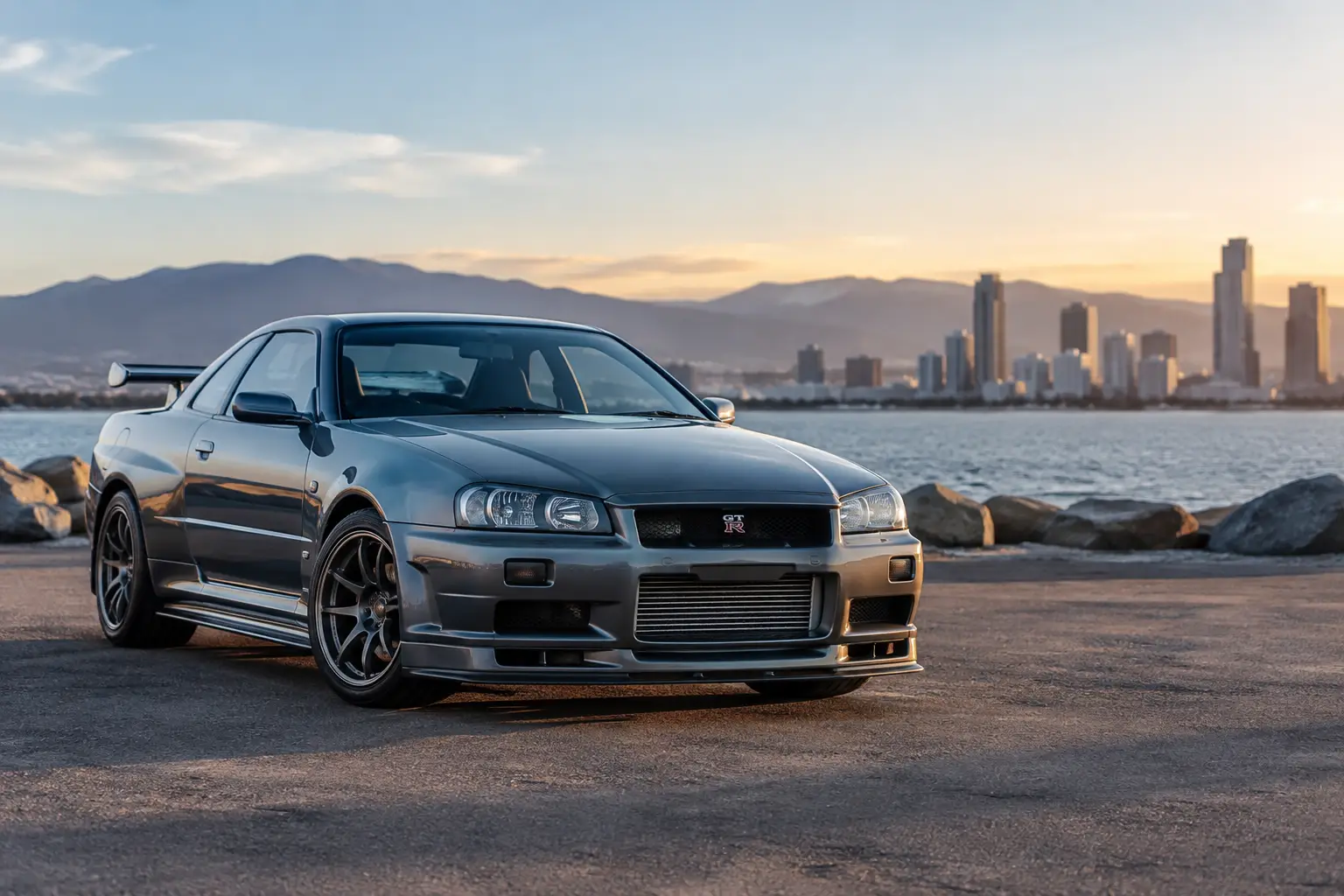
A Nissan Skyline GT-R is not made legal in the United States by a clean auction sheet, a Japanese export certificate, or a seller calling it “import eligible.” Federal age rules, EPA requirements, customs entry, and state title procedures all have to line up. Get one part wrong and a car that looked like a dream purchase in Japan can become an expensive port problem.
For buyers asking how to import skyline gtr to usa legally, the key is to confirm eligibility before bidding or buying - not after the vessel has sailed. The good news is that many Skyline GT-R generations now qualify for normal importation. The catch is that eligibility is determined by the individual car’s production date and condition, not simply its model year badge.
The 25-year rule is based on the build date
Most Japanese-market Skyline GT-Rs were never certified to meet U.S. Federal Motor Vehicle Safety Standards when new. That is why a standard import generally cannot enter the country until it is at least 25 years old.
The National Highway Traffic Safety Administration exemption applies when the vehicle is 25 years old or older from its date of manufacture. This is not a loose “model year” calculation. A Skyline built in November 2001 does not become eligible in January 2026 just because it is commonly described as a 2001 model. It becomes eligible in November 2026.
This distinction matters most with R34 GT-Rs. As of 2026, early-production R34s are eligible, while later 2001 and 2002 examples must wait until their exact 25-year manufacturing anniversary. R32 GT-Rs are fully past the threshold, and R33 GT-Rs are also generally eligible. Still, documentation should verify the individual car rather than relying on a general rule about the chassis generation.
A legitimate Japanese export file should support the manufacturing date through records such as the Japanese registration history, export certificate, chassis information, and auction paperwork. If a seller cannot clearly establish the production month, treat that as a problem to solve before purchase.
EPA eligibility is a separate requirement
The 25-year safety exemption does not replace Environmental Protection Agency requirements. For EPA purposes, a vehicle that is at least 21 years old may generally qualify for an age-based exemption if it remains in its original, unmodified configuration.
That phrase deserves attention. An R32, R33, or eligible R34 with its original engine and emissions-related configuration is usually far easier to document than a heavily altered car. An engine swap, removed catalytic converter, standalone management system, or major emissions modification can create questions at entry even when the vehicle is old enough under the 25-year safety rule.
This does not mean every modified Skyline will automatically be refused, but it does mean the buyer should not assume that age cures every compliance issue. A candid inspection of the engine bay, exhaust, ECU, and chassis is worthwhile before a bid is placed. The cheapest GT-R at auction can become the most costly one if its history is unclear or its modifications are poorly documented.
Which Skyline GT-R should you import?
Eligibility is only the first filter. Condition, corrosion, originality, parts quality, and intended use should shape the decision just as much as the chassis code.
An R32 GT-R is often the most straightforward path for a buyer who wants a usable, legally importable Skyline with a broad support network. However, these cars are now more than three decades old. Rust around the rear arches, floorpan, strut towers, trunk area, and suspension mounting points matters more than a fresh-looking exterior.
An R33 GT-R can represent strong value, particularly for buyers who prefer its longer wheelbase and more stable high-speed character. R34 GT-Rs carry extraordinary collector demand, but the purchase price, insurance value, parts costs, and scrutiny around authenticity are all higher. A GT-R badge alone is not enough - chassis verification is essential, particularly where clone, conversion, or repaired-history concerns exist.
At Japanese auctions, auction grade is useful but not absolute. A grade does not replace physical inspection, and it does not tell the whole story about prior paintwork, underbody corrosion, aftermarket wiring, smoke on startup, drivetrain noise, or the quality of a previous repair. High-resolution photos, a translated auction sheet, and in-person mechanical feedback give a remote buyer a much more defensible basis for purchase.
Documents needed to import a Skyline GT-R legally
Your customs broker and shipping provider will guide the formal entry process, but the importer should understand the documents behind it. In most cases, the core file includes:
- The bill of lading showing the vehicle’s ocean shipment and consignee details.
- A commercial invoice or purchase invoice showing the transaction value.
- The Japanese export certificate or deregistration paperwork, with an accurate translation where needed for titling.
- Federal entry forms, including the DOT HS-7 declaration and EPA Form 3520-1.
U.S. Customs and Border Protection will also require entry documentation, commonly including CBP Form 7501. For ocean shipments, an Importer Security Filing must be submitted before the cargo is loaded abroad. A competent broker can handle these filings, but the buyer remains responsible for providing correct information.
Keep every document consistent. The chassis number, buyer name, purchase value, and vehicle description should not conflict from invoice to bill of lading to customs entry. Small errors can delay a release. Large errors, especially an inaccurate declared value or a questionable vehicle age, can create far more serious issues.
For a passenger vehicle, customs duty is commonly 2.5 percent of the declared value, plus applicable processing fees. Shipping, insurance, broker fees, port charges, inland transport, and state taxes are separate costs. Do not build a purchase budget around the hammer price alone.
Shipping and port release are not the finish line
A GT-R can be shipped by roll-on/roll-off service or in a container. Roll-on/roll-off is often cost-effective for an operable vehicle, while container shipping can suit higher-value cars, spare parts, or buyers who want additional control over loading. The better choice depends on route availability, timing, budget, and the vehicle’s condition.
Before the car reaches the U.S. port, arrange marine insurance, broker representation, and a plan for collection or inland transport. Ports charge storage when cargo sits too long. A buyer who waits for the arrival notice before organizing customs and trucking can lose time and money quickly.
The vehicle should also arrive clean. Soil, mud, plant material, and contamination underneath the chassis can attract inspection attention. Japan-export vehicles are usually prepared properly, but a pre-shipment check is far cheaper than dealing with a delay after arrival.
Title and registration depend on your state
Federal import approval allows the vehicle to enter the United States. It does not automatically provide a state title, license plate, or permission to drive it on public roads.
Each state has its own DMV procedures, tax rules, inspection requirements, and emissions exemptions for older vehicles. Some states are simple with properly documented 25-year-old imports. Others want additional forms, a physical VIN inspection, or specific translations of Japanese documents. Contact your state motor vehicle agency before shipping, especially if the vehicle will be registered in a state with strict emissions or modified-vehicle rules.
Insurance is worth arranging early as well. Collector-car coverage may be available, but agreed-value policies often require photos, a valuation, secure storage details, or limits on how the vehicle is used.
Avoid shortcuts that create expensive problems
The most common mistakes are predictable: buying based on a seller’s claim rather than the manufacture date, importing a car before its 25th anniversary, declaring an unrealistic purchase price, and assuming a modified vehicle is automatically exempt because it is old.
Avoid title-washing schemes, false build dates, and claims that a car can be registered under another vehicle’s identity. Those shortcuts can lead to seizure, penalties, loss of the vehicle, and a title that cannot be defended later. “Show or Display” is also not a general workaround for a Skyline GT-R. It is a narrow federal pathway for specific vehicles and should never be treated as a substitute for normal age-based eligibility.
The right process is less exciting than a late-night auction win, but it protects the purchase. Confirm the build date, inspect the actual car, document its condition honestly, prepare the import file before shipment, and make sure your state can title it. That is how a Skyline GT-R becomes a car you can enjoy on U.S. roads rather than a problem waiting at the port.