Japan Auction Pre-Purchase Inspections Explained

A clean auction grade can make a vehicle look like an easy buy. But when buyers search for “pre purchase inspection Japan auction,” they are usually trying to avoid the same expensive problem: discovering condition issues only after the vehicle has been shipped across an ocean. Auction sheets are useful, but they are not a substitute for having an experienced person physically assess the vehicle before a bid is placed.
For an overseas buyer, the goal is not to find a perfect used car. It is to understand the car accurately, set a sensible bid limit, and know whether its condition matches the intended use. That may mean a collector-grade Skyline, a clean dealership retail unit, or a practical daily driver. Each requires a different level of scrutiny.
Why Auction Sheets Are Not the Full Story
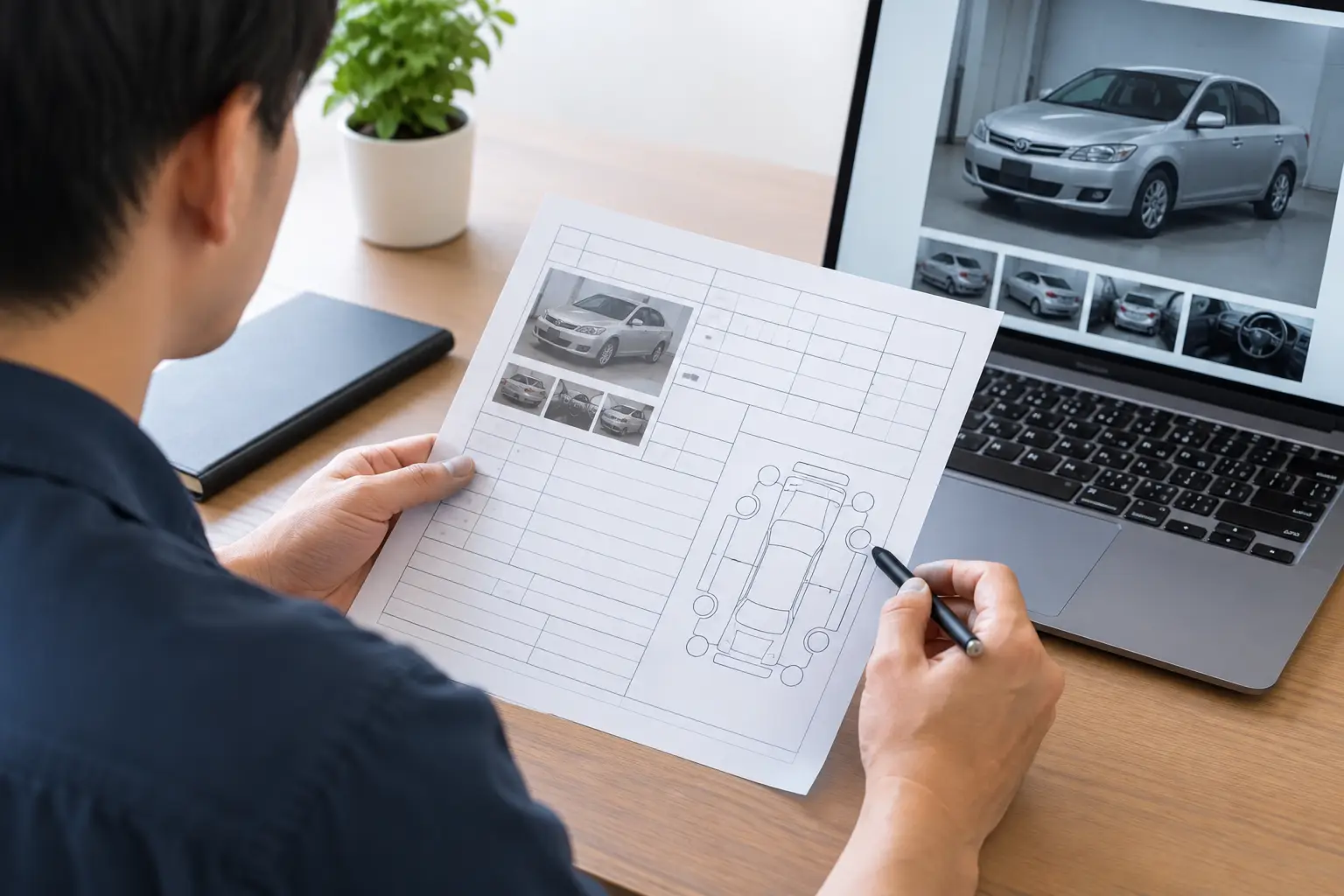
Japanese vehicle auctions use condition grades, exterior diagrams, and inspector comments to communicate a large amount of information quickly. A grade 4, for example, often indicates a vehicle in above-average used condition. It does not mean flawless, original, mechanically perfect, or free from future repair needs.
Auction inspectors work to a fast schedule and assess thousands of vehicles under auction standards, not under the standards of a buyer preparing for export. Their notes may identify scratches, dents, corrosion, interior wear, repainting, repairs, or warning lights. However, comments can be brief, handwritten, and limited by what is visible at the time of inspection.
A physical pre-purchase inspection adds context. It answers questions an auction sheet cannot always answer: Is that quarter-panel repair minor cosmetic work or evidence of a more significant accident? Is the underbody surface rust normal for the vehicle’s age, or is there corrosion that will affect registration or resale? Does the engine sound healthy at idle? Are the tires, brakes, and interior consistent with the stated mileage?
For vehicles headed to the United States, auction condition also has a practical compliance angle. A vehicle may be old enough to import under the 25-year rule, but serious structural corrosion, undocumented modifications, or questionable odometer history can still make it a poor purchase. Import eligibility is only one part of buying well.
What a Pre-Purchase Inspection at a Japan Auction Covers
A proper auction inspection should focus on the areas that affect value, safety, repair cost, and buyer expectations. The exact scope depends on the auction house, vehicle location, time available before the sale, and the type of vehicle being considered.
The inspection begins with identity and documentation checks. The chassis number should match the auction listing, and the odometer reading should be reviewed alongside the auction history where available. If a buyer needs additional assurance on mileage, JEVIC odometer certification may be appropriate. JEVIC certification is valuable evidence, but it serves a different purpose from a hands-on condition inspection. It does not replace checking the vehicle’s body, mechanical operation, or prior repairs.
The exterior assessment looks beyond the diagram on the auction sheet. A trained inspector checks paint consistency, panel alignment, signs of repainting, rust around wheel arches and seams, damaged trim, cracked lights, and condition of glass. Paintwork is not automatically a reason to walk away. Many Japanese cars have had minor cosmetic repairs. The question is whether the work is consistent with a well-maintained used vehicle or whether it suggests accident damage, poor repairs, or future corrosion concerns.
Underbody condition deserves particular attention. Vehicles from snowy regions can carry corrosion that is easy to miss in listing photos. Inspecting the chassis rails, floor pan, suspension mounting points, exhaust, brake lines, and wheel wells gives a clearer picture of the car’s long-term prospects. A little surface oxidation may be expected on an older vehicle. Rust affecting structural areas is a different decision entirely.
The mechanical check is necessarily limited at a busy auction site, but it remains valuable. It can include checking cold or warm starting behavior, engine idle, exhaust smoke, visible leaks, warning lights, transmission engagement, air conditioning operation, and unusual noises. On performance vehicles, signs of heavy modification, boost-related changes, nonstandard wiring, or hard use matter just as much as a strong-looking auction grade.
The interior is also part of the value calculation. Cigarette odor, damp carpets, missing trim, damaged dashboards, seat wear, aftermarket electronics, and non-functioning accessories can affect resale value and customer satisfaction. These items may not stop a purchase, but they should be known before bidding, not discovered at the destination port.
The Value Is in the Report, Not Just the Inspection
An inspection only helps if the buyer receives clear, usable information before the auction closes. A useful report translates the auction sheet and explains what the inspector actually found in plain English. It should distinguish between normal age-related wear, manageable defects, and issues serious enough to change the bid strategy.
High-resolution photos are especially important for remote buyers. Wide shots establish the overall condition, while close photos show paint flaws, rust, tires, engine-bay details, interior wear, and any repaired or damaged areas. Video can be helpful when available, particularly for engine startup, idle quality, or unusual noises.
The best reports do not pretend that every used vehicle can be guaranteed from an auction lane. They give an honest judgment based on physical evidence and market experience. If a vehicle looks suitable, the report should say why. If it has concerns, those should be stated directly, along with the likely impact on value or ownership.
At Direct Imported Japan, that practical judgment is central to the process. We do not sit behind a computer and simply repeat auction-sheet comments. Physical auction attendance and inspection experience help buyers make a decision based on the vehicle in front of us, not just on a listing description.
How an Inspection Should Change Your Bid
The inspection report should lead to a clear decision: bid confidently, bid only at a reduced limit, or pass. Trying to win every vehicle is one of the fastest ways to overpay at auction. Japan offers fresh inventory every week, and patience is often more valuable than forcing a purchase.
A vehicle with light cosmetic damage may still be an excellent buy if the price leaves room for repairs, shipping, duties, and the buyer’s expected resale margin. For a dealer, this calculation should include reconditioning costs at destination, not only the hammer price. A small scratch that is inexpensive to correct in Japan may cost far more once the car reaches the United States, Canada, Australia, or the United Kingdom.
For collectors, originality can matter more than cosmetic perfection. An unmodified, rust-free car with honest paint wear may be more desirable than a freshly repainted example with unclear history. For a retail buyer, the opposite can be true. The right purchase depends on the purpose, budget, and tolerance for restoration work.
An experienced sourcing partner can help establish a maximum bid before the sale, based on the vehicle’s condition and total landed cost. That keeps emotion out of the auction lane and protects the buyer from chasing a vehicle beyond its real value.
Questions to Ask Before You Authorize a Bid
Before approving a vehicle, ask whether the auction grade aligns with the physical condition, whether any repairs or repainting appear significant, and whether there is visible rust underneath. Confirm that the mileage appears credible and that modifications are understood. If the car is intended for a regulated market, verify that its age, emissions status where applicable, and documentation route make sense before purchase.
It is also wise to ask what the inspection cannot confirm. Auction inspections are not full workshop evaluations, and a short on-site assessment cannot disassemble components or predict every future failure. Honest guidance includes acknowledging those limits. The purpose is risk reduction, not an unrealistic promise that a used vehicle will never need maintenance.
Inspection Before Shipping Still Matters
Winning the auction is not the end of quality control. Once purchased, the vehicle should be checked again before export preparation. This is the time to confirm the car received matches the purchased unit, document its condition before shipping, and address any agreed services such as cleaning, basic repairs, or export-related preparation.
Depending on the destination, separate pre-shipment requirements may apply. JEVIC inspections are commonly relevant to certain import markets, while QISJ or EAA requirements may apply based on the importing country and vehicle type. These inspections address regulatory or certification requirements. They should be coordinated early, because passing a pre-shipment inspection does not automatically resolve a condition concern identified at auction.
A good Japan auction purchase starts with evidence, not optimism. Ask for the information that lets you bid with your eyes open, then leave room in the budget for the realities of an imported used vehicle. The right car is worth waiting for, and the right inspection makes that wait far less risky.