Best JDM Cars Legal to Import to USA This Year
A 2001 model year badge does not automatically make a car legal on January 1. For the best JDM cars legal to import to USA this year, the exact production month matters. A vehicle becomes eligible under the federal 25-year exemption on its 25th birthday, not simply because it carries an eligible model year.
That detail can be the difference between a clean import and a costly car sitting at port. The right car also needs more than a desirable chassis code. It needs a verified build date, correct export paperwork, an honest condition assessment, and a plan for registration in your home state.
The 25-year rule in 2026
For most Japanese-market vehicles never certified for U.S. Federal Motor Vehicle Safety Standards, the practical federal pathway is the National Highway Traffic Safety Administration 25-year exemption. In 2026, vehicles manufactured in 2001 become eligible month by month. A car built in March 2001 is not eligible until March 2026; one built in November must wait until November.
The Environmental Protection Agency has a separate age-based exemption for vehicles at least 21 years old that remain in their original, unmodified configuration. In practice, a properly documented 25-year-old JDM vehicle can generally be imported without having to bring it into full modern U.S. safety and emissions compliance. That does not make every modified auction car a safe purchase. Engine swaps, missing emissions equipment, questionable VIN identity, and incomplete documents can all create avoidable trouble.
Federal import eligibility is only the first checkpoint. State title, inspection, insurance, and emissions rules still apply. California deserves special caution because its registration and emissions requirements can be far more difficult than those in many other states. Before bidding, confirm what your state will require for an imported right-hand-drive vehicle.
Best JDM cars legal to import to USA this year
The best choice depends on whether you want a collector-grade weekend car, a usable performance sedan, or inventory that will appeal to a specific buyer. These are the strongest 2026 candidates and established 25-year imports worth sourcing from Japan.
Nissan Skyline GT-R R34
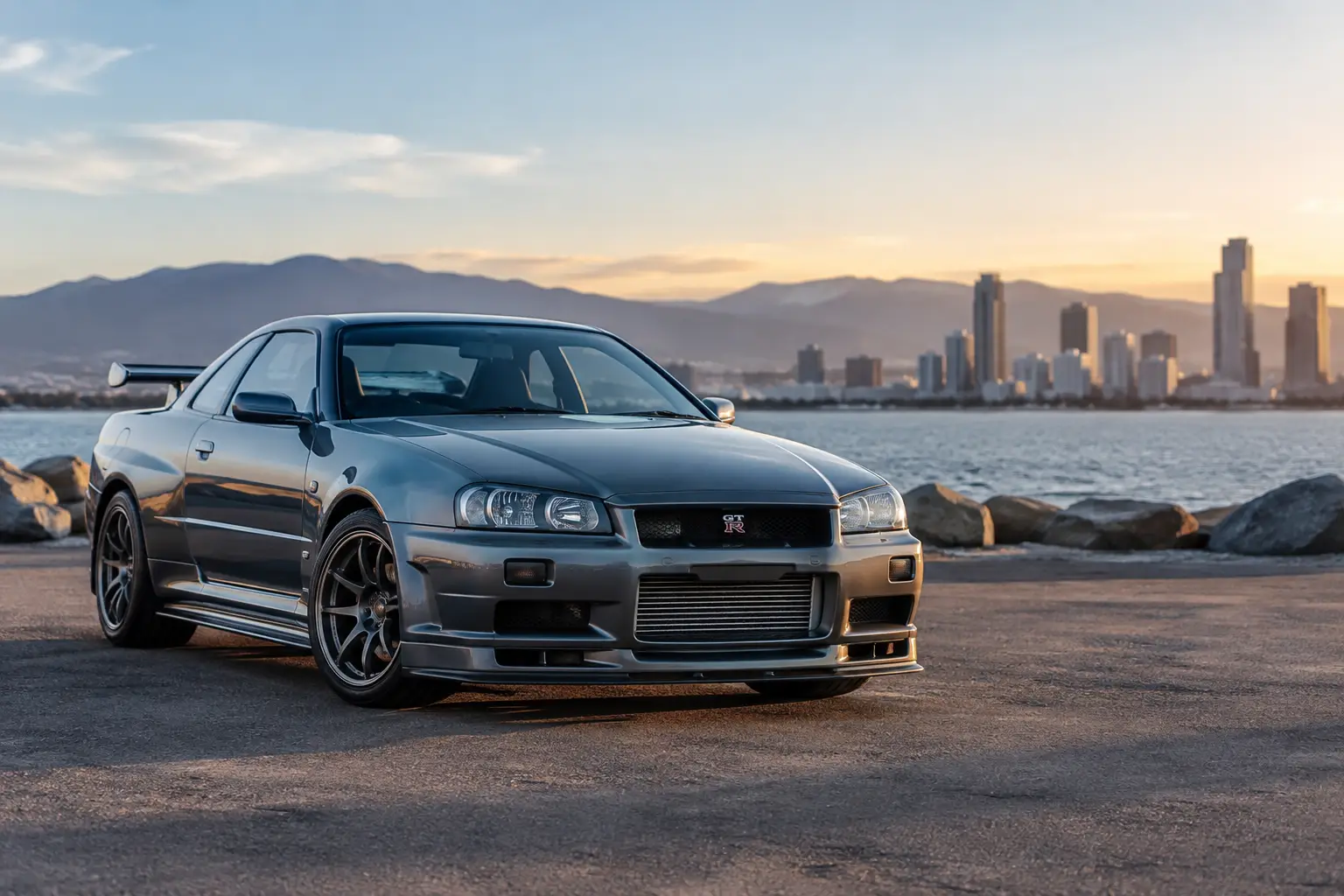
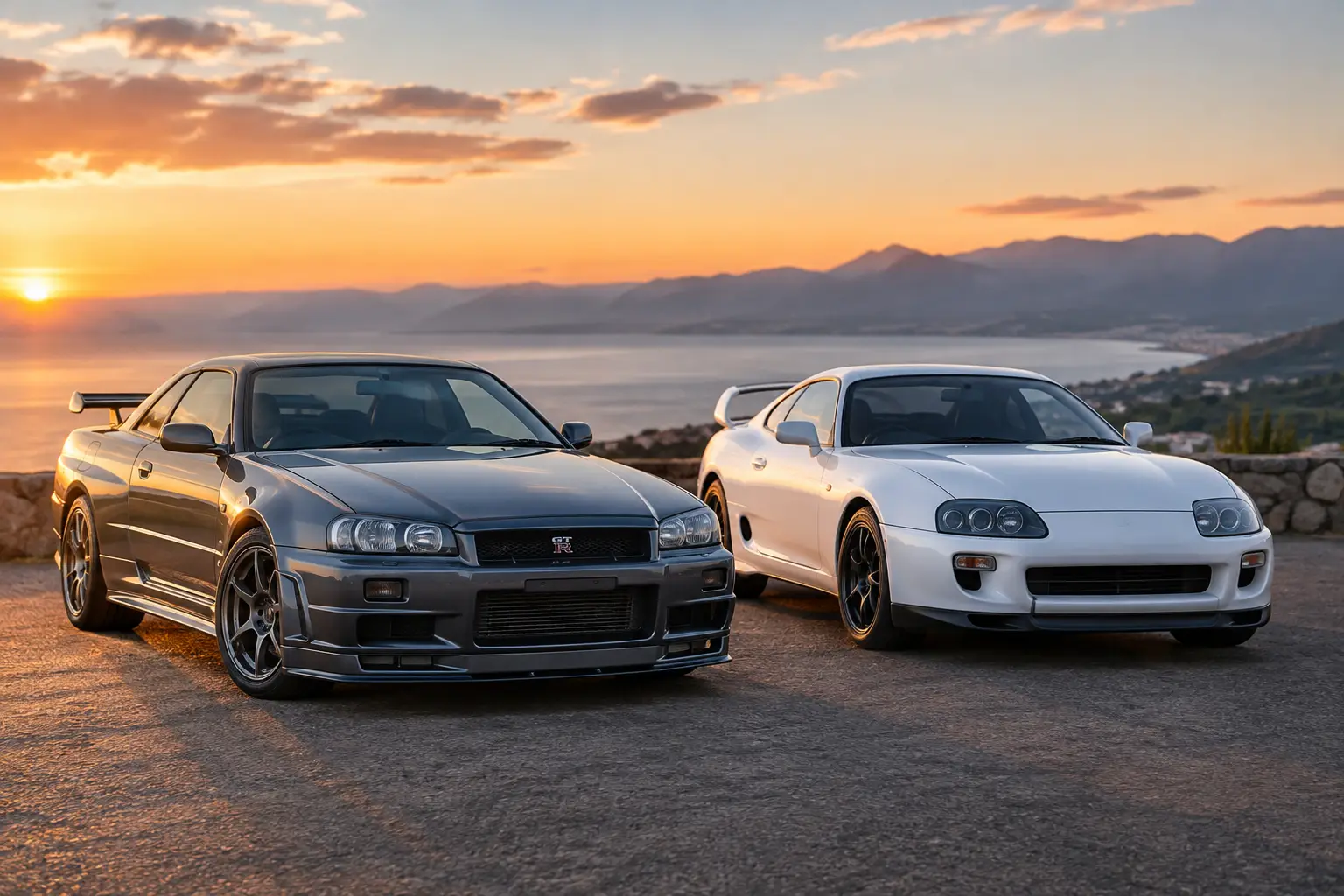
The R34 GT-R is the headline car, and for good reason. Its RB26DETT, ATTESA E-TS all-wheel-drive system, and unmistakable shape make it one of the most recognized Japanese performance cars ever built. Early-production examples have already been legal for several years, while 2001 cars become eligible as their individual production dates pass in 2026.
This is not a car to buy casually from photos. Original examples command serious money, while many cars have been modified, repaired, or converted from lesser Skyline grades. Verify the chassis number, auction history, underbody condition, accident repair notes, engine condition, and whether expensive GT-R-specific parts remain original. A clean but higher-mileage car can be a better ownership proposition than a shiny, low-mileage example with unclear history.
Nissan Silvia S15 Spec R
The Silvia S15 Spec R remains one of the most balanced JDM imports available. It is compact, rear-wheel drive, visually clean, and powered by the turbocharged SR20DET. The 2001 cars entering eligibility this year are especially appealing to buyers who want a genuine Japanese sports coupe without stepping into R34 pricing.
Condition varies dramatically. Drift use is common, and the usual concerns include chassis damage, poor-quality suspension work, corrosion around the rear structure, tired turbos, and modifications installed without supporting upgrades. A factory-looking Spec R with documented condition is becoming harder to find, but it remains one of the most enjoyable cars to drive rather than simply store.
Mitsubishi Lancer Evolution VII
The 2001 Evolution VII arrives at the 25-year threshold in 2026 and is a major opportunity for buyers who want rally-bred performance. It brought the 4G63 turbo engine into a more modern platform with active center differential technology, sharp chassis behavior, and a practical four-door body.
Evos deserve close mechanical inspection. Look beyond the paint and aftermarket wheels. Compression results, transmission behavior, transfer case condition, active differential operation, evidence of hard launches, and rust underneath matter more than cosmetic extras. A largely stock Evo VII may cost more at auction, but it gives the buyer a clearer starting point than a heavily tuned example with an unknown mapping and drivetrain history.
Mazda RX-7 FD3S
Late FD RX-7s remain one of the most special Japanese performance cars available under the age rule. The twin-turbo 13B-REW delivers a driving experience that no piston-engine alternative truly replicates. In 2026, 2001 production cars become eligible on their build-date anniversary, opening access to later Series 8 examples.
The trade-off is clear: rotary ownership demands discipline. Warm-up habits, compression health, cooling-system condition, oiling provisions, turbo condition, and the quality of previous tuning must be evaluated. A cheap FD is rarely cheap once it reaches the garage. A verified, unmodified or sensibly maintained car is worth pursuing, even if the auction price looks less exciting.
Toyota Altezza RS200 and Lexus IS300 platform
For a buyer who wants a practical JDM car with strong parts support, the Toyota Altezza RS200 is an intelligent choice. The high-revving 3S-GE, rear-wheel-drive layout, and available six-speed manual give it real character, while the chassis is familiar to U.S. enthusiasts through the first-generation Lexus IS.
It is not as rare or dramatic as a GT-R, but that is part of its appeal. The Altezza can be a more approachable entry into Japanese imports, especially for buyers who prioritize driving, serviceability, and a manageable purchase price. Confirm whether you are looking at an RS200 versus the less performance-focused AS200, and inspect for typical age-related suspension wear, cooling issues, and signs of amateur modification.
Toyota Chaser Tourer V and Mark II Tourer V
The JZX100 Toyota Chaser and Mark II Tourer V are already eligible, but they remain among the best cars to source in 2026. Their 1JZ-GTE turbocharged inline-six, rear-wheel-drive layout, and understated sedan body make them unusually versatile. They work as collector cars, weekend street cars, or distinctive specialty inventory.
Their popularity with drift enthusiasts has reduced the supply of untouched examples. Auction sheets often reveal the story: aftermarket turbo systems, welded differentials, repaired quarter panels, rough interiors, and underbody damage are all common. A clean automatic car should not be dismissed automatically. It may have avoided the hardest use, and a buyer should assess the specific car rather than chase a transmission label alone.
What makes a JDM import worth buying
Age eligibility is not a condition report. Japanese auction grades are useful, but they are a starting point, not a guarantee. Grade 4 does not mean perfect, and repaired history grades require careful interpretation of the repair location and quality. Auction photos also do a poor job of showing underbody corrosion, smoke at startup, transmission behavior, or intermittent electrical faults.
For higher-value purchases, insist on an independent pre-purchase inspection from someone physically present at the auction. Ask for detailed photos of the underbody, engine bay, tire condition, seams, trunk floor, and known trouble areas for that model. Request a translated auction sheet and verify the odometer through available records and appropriate certification. Direct Imported Japan can provide the on-the-ground inspection, translated reporting, auction representation, and export coordination that make those decisions more defensible from overseas.
Originality is not always mandatory, but the modifications need to make sense. Quality suspension, wheels, brakes, and documented maintenance can add value. Unknown ECU tuning, missing catalytic equipment, hacked wiring, loud exhausts, and mismatched parts usually add risk. The most marketable cars are often clean, well-kept examples with a credible history, not the ones with the longest modification list.
Budget beyond the auction hammer price
The auction purchase price is only one line in the real cost. Buyers need to account for auction fees, exporter fees, inland transport in Japan, ocean freight, marine insurance, port handling, customs entry, duty, and delivery from the U.S. port. Passenger vehicles generally carry a 2.5% customs duty, while trucks can face a much higher 25% duty. Motorcycle duty is generally 2.4%. Classification matters, so do not budget from a forum post about a different vehicle type.
You will also need the appropriate federal declarations and import documents, typically including the DOT HS-7 form, EPA Form 3520-1, bill of lading, Japanese export certificate, and commercial paperwork. Accurate values and matching chassis information are essential. Shortcuts with declared value or documents can turn a straightforward import into a seizure risk.
A clean landing cost also leaves room for first-service work. Fluids, belts, hoses, tires, batteries, brakes, and filters may need attention even on a low-mileage Japanese vehicle. Build that work into the purchase decision rather than treating it as bad luck after delivery.
The best import is not necessarily the rarest badge or the cheapest listing. It is the car whose build date is eligible, whose condition is verified before the bid, and whose total landed cost still makes sense once it reaches your driveway.