Landed Vehicle Costs for Japanese Imports
A Japanese auction winning bid is not the price of the vehicle in your driveway. It is the starting point. Landed vehicle costs bring together the purchase, export work, ocean freight, customs charges, port handling, and domestic transport required to move a vehicle from Japan into your hands.
For a collector buying one special vehicle, a missed cost can turn an exciting purchase into an unpleasant surprise. For a dealer importing inventory, small errors in the calculation can erase the margin on an otherwise well-bought car. The right approach is not to chase the lowest auction hammer price. It is to build a complete, realistic cost before you bid.
What Landed Vehicle Costs Actually Include
Your landed cost is the total amount paid to acquire a vehicle and make it available at the agreed destination. Depending on the shipment terms, that destination may be the export port in Japan, the arrival port, a bonded warehouse, or your dealership.
A useful working formula is:
Vehicle purchase price + Japan-side charges + shipping and insurance + import taxes and fees + arrival-port charges + inland delivery = landed cost
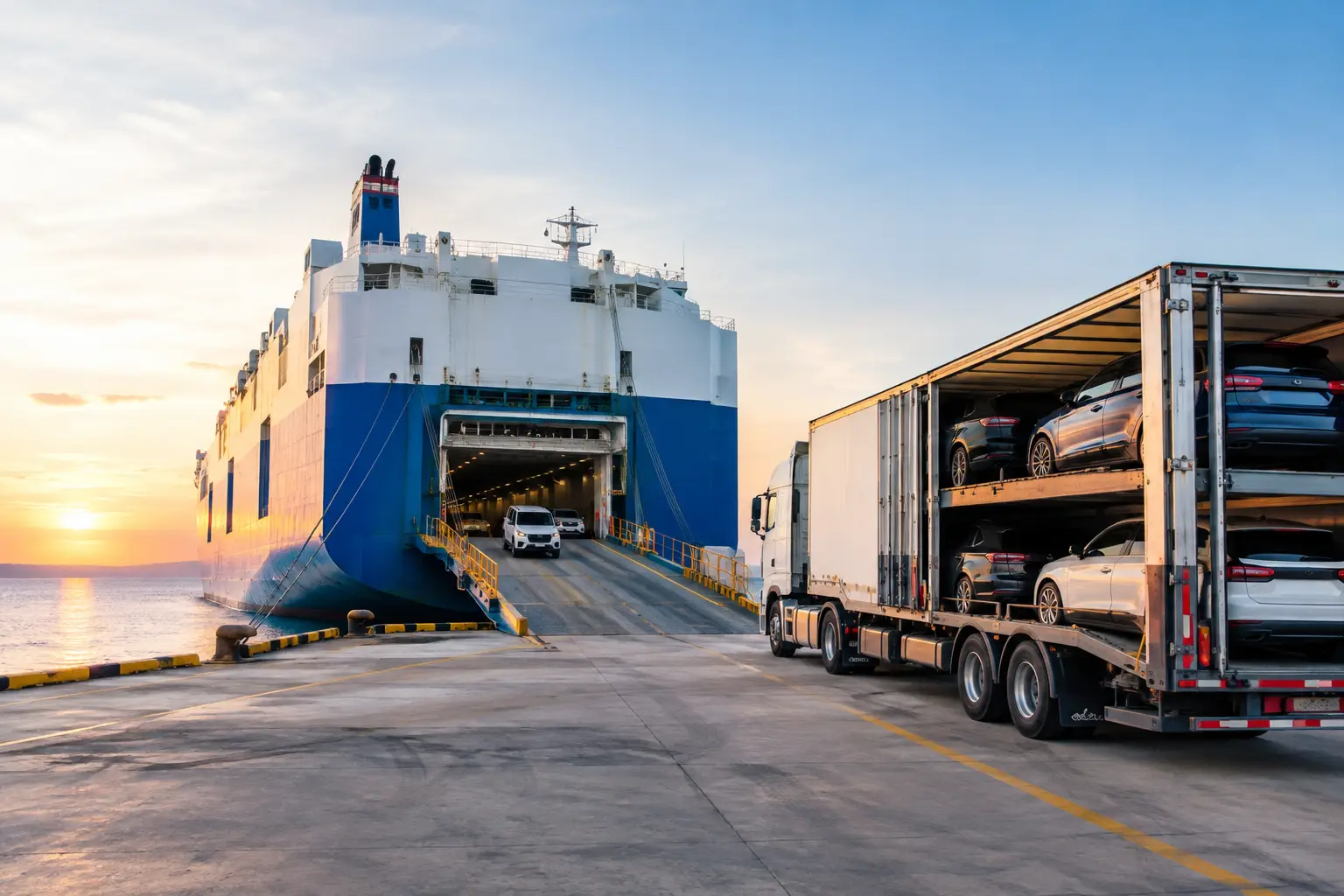
The exact numbers change by vehicle, route, destination country, and timing. A compact car shipped to the West Coast has a very different freight profile from a larger SUV, truck, or performance car headed to the East Coast. Roll-on/roll-off shipping can be cost-effective for an operable vehicle, while container shipping may make more sense for a high-value car, modified vehicle, or a shipment requiring parts and spares to travel separately.
The most reliable quote identifies what is included, what is estimated, and which arrival charges remain payable locally. A quote that looks cheap because it stops at the Japanese port is not necessarily cheap once the vehicle reaches your country.
Start With the True Purchase Cost in Japan
At auction, the winning bid is only one component of the Japan-side total. Auction houses charge buyer fees, and the exporter must arrange payment, collection, transport from the auction, documentation, and export preparation. Depending on the transaction, there may also be inspection, storage, cancellation, or compliance-related charges.
Currency movement deserves attention as well. Most Japanese vehicle purchases are priced in yen. If you are budgeting in U.S. dollars, a shift in the exchange rate between deposit, purchase, and final invoice can change the total. Serious buyers should leave room in the budget rather than treating a currency conversion shown on auction day as guaranteed.
Condition also affects cost long before shipping begins. A lower-grade vehicle may save money at auction but require paintwork, tires, mechanical repair, rust treatment, or replacement trim after arrival. Auction sheets provide valuable information, but they are not a substitute for a physical evaluation. A translated report may tell you that a panel has repair marks; an in-person inspection can help determine whether that is a minor cosmetic issue or evidence of a repair that changes the vehicle's value.
This is where a hands-on export partner earns its place. Direct Imported Japan can inspect vehicles at auction, report the real condition in English, and help buyers decide whether a car is worth pursuing before a bid becomes a commitment.
Export Fees, Documents, and Pre-Shipment Work
Japan-side charges generally cover the work needed to move the vehicle legally out of Japan. That can include auction collection, export deregistration, export certificate handling, booking coordination, and port delivery. The required documents vary by destination, but title-equivalent export paperwork, commercial invoices, and shipping documents must be accurate. An incorrect VIN, chassis number, buyer name, or declared value can delay clearance on the other side.
Some markets require a pre-shipment inspection or an odometer verification program. JEVIC certification, for example, can provide documented odometer verification where it is requested or valued. Australia, New Zealand, and several other markets may have their own inspection and biosecurity processes. These are not optional line items to add later. They should be part of the cost and timeline before purchase.
Freight Is More Than the Ocean Rate
Ocean freight is the line buyers notice first, but it is not the whole shipping bill. The cost can include the voyage itself, terminal handling, documentation, port security charges, and marine insurance. Rates also move with shipping capacity, fuel costs, route demand, season, vehicle dimensions, and departure schedule.
Ask whether the freight quote is based on FOB, CFR, or another shipping term. Under FOB, the vehicle is delivered to the departure vessel or port under the agreed terms, while the buyer commonly handles ocean freight and destination expenses. A CFR-style quote includes ocean freight to the named destination port, but it still does not automatically mean every arrival charge is included. Insurance may also be separate.
Marine insurance is often modest compared with the value at risk. Skipping it to reduce the invoice can be a poor trade-off, particularly for a rare vehicle or a car that cannot be readily replaced. Read the policy limits and exclusions rather than assuming every type of damage is covered.
Import Duty, Taxes, and Compliance Costs
For U.S. buyers, customs duty depends on the classification of the vehicle, not on its popularity or auction grade. Passenger vehicles, trucks, motorcycles, and parts can face different duty treatment. Pickup trucks deserve special attention because the duty rate can differ sharply from a passenger car. Customs brokers can confirm classification and current charges for the specific vehicle.
Federal import eligibility is equally important. A vehicle that is at least 25 years old can generally be imported without having to meet the Federal Motor Vehicle Safety Standards that apply to newer vehicles, provided the age is calculated correctly. The 21-year EPA rule is separate, and state registration requirements are separate again. A vehicle can clear federal import requirements yet still need attention to state title, emissions, inspection, or insurance rules.
Do not confuse customs clearance with legal road registration. Before bidding, confirm the vehicle's production date, VIN or chassis-number format, title pathway, and local requirements in the state where it will be registered. The cost of correcting an avoidable compliance mistake is usually far greater than the cost of checking first.
Beyond duty, U.S. imports may involve the Merchandise Processing Fee, Harbor Maintenance Fee, customs broker fees, and filing requirements such as the Importer Security Filing for ocean shipments. Some states also collect sales or use tax when the vehicle is titled. These amounts are not all paid to the same party or at the same time, which is why a cash-flow plan matters as much as the headline total.
Destination Charges Can Change the Deal
Once the vessel arrives, the vehicle may accumulate charges quickly if documents, customs entry, or pickup arrangements are not ready. Common destination costs include terminal handling, port storage, vehicle release fees, customs brokerage, inspection appointments, and trucking from the port to your address.
Port selection matters. A lower ocean rate to a distant port may be offset by higher inland transport, longer delivery time, or more complex handling. For a buyer in the Midwest, for example, compare the full cost of shipping through multiple gateways rather than choosing based on the lowest freight quote alone.
Storage is the charge most worth avoiding. Ports and terminals allow limited free time, then charge daily fees. The solution is simple but requires preparation: appoint the broker early, have funds available, confirm the original shipping documents or release process, and schedule transport before the vessel arrives.
How to Build a Bid Ceiling Before Auction
A disciplined bid ceiling protects you from emotional bidding. Begin with the maximum all-in amount you can justify based on your budget, retail plan, or collection goal. Subtract estimated destination costs, duty and taxes, ocean freight, Japan-side export charges, and a contingency for currency movement or repairs. What remains is your maximum vehicle purchase amount.
For dealers, include reconditioning, floor-plan cost, advertising, and an honest margin. For private buyers, include registration, insurance, and the work needed to make the car safe and enjoyable. A clean auction grade does not mean a vehicle has no age-related maintenance needs.
The contingency should be meaningful, not symbolic. Older JDM vehicles can reveal worn suspension components, old tires, air-conditioning issues, or corrosion that was not obvious in auction photos. A detailed pre-purchase inspection reduces uncertainty, but it cannot turn a decades-old vehicle into a new one.
A well-planned import should feel predictable by the time the vehicle reaches the port. Clear and honest pricing is not merely a single number. It is a complete explanation of what the number covers, what can change, and what actions will keep the shipment moving. Build your landed-cost worksheet before bidding, then use it to buy the right vehicle rather than simply the cheapest one.