UK IVA Testing for an Imported Japanese Car
A clean auction sheet, verified mileage, and a strong mechanical inspection are only part of bringing a JDM vehicle home. For UK IVA testing, an imported Japanese car must also meet the approval and registration requirements that apply in Great Britain. A vehicle can arrive in excellent condition from Japan and still be held up by a speedometer reading only in km/h, an unsuitable rear fog lamp, or paperwork that does not match the vehicle.
The sensible approach is to identify the likely approval route before you bid, then plan the required modifications while the car is still in Japan or immediately after it arrives. That keeps the process controlled, protects your budget, and avoids converting a minor compliance job into weeks of storage and re-test fees.
What UK IVA Testing Means for an Imported Japanese Car
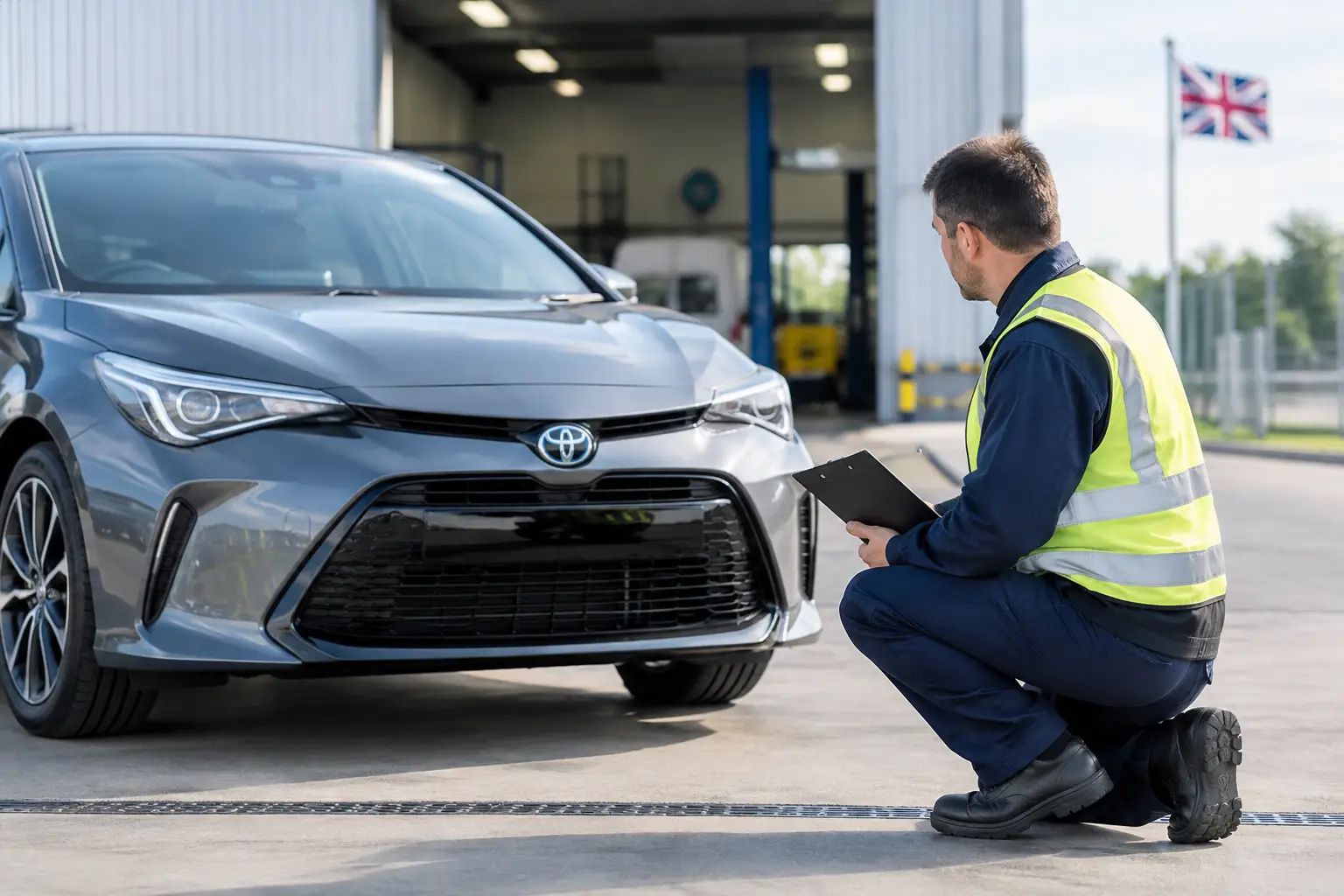
IVA means Individual Vehicle Approval. It is an inspection route used to assess a vehicle that does not have the type approval evidence normally expected for registration in Great Britain. Many Japanese Domestic Market vehicles were built for Japan, not the UK or European market, so they may need IVA before the Driver and Vehicle Licensing Agency can register them.
This is not the same as an MOT. An MOT checks whether a vehicle is roadworthy at the time of test. IVA considers whether the vehicle meets a broader set of construction, lighting, safety, environmental, and identification requirements for first registration. Passing an MOT does not automatically mean a car is ready for IVA or DVLA registration.
Not every imported vehicle follows precisely the same route. Its age, category, previous registration history, specification, and the evidence available all matter. A vehicle with recognized approval documentation can be treated differently from a Japanese-market vehicle with no relevant approval evidence. This is why buyers should confirm the current DVSA requirements for their exact vehicle before purchasing or modifying it.
This guidance is aimed at registration in Great Britain - England, Scotland, and Wales. Northern Ireland has separate procedures and should be checked with the relevant local authorities before shipment.
The Areas That Commonly Cause IVA Failures
Most Japanese imports do not fail because they are poor vehicles. They fail because a component that is perfectly normal in Japan does not satisfy a UK test requirement. The details matter, and the correct fix depends on the model, model year, and how the car has been modified.
Lighting and rear visibility
Headlamps are a frequent issue. Japanese-market lights are designed for driving on the left, which is also the case in Great Britain, but beam pattern, lens markings, and performance can still require attention. Do not assume that a left-hand-drive-market headlamp conversion is necessary simply because the car is imported. Assess the actual lamp, its beam pattern, and the applicable IVA standard.
A rear fog light is another regular requirement. Japan-spec cars may have no rear fog light, or may have one positioned or wired in a way that is not acceptable for UK use. The installation needs to be secure, properly positioned, and independently controllable as required. A rushed aftermarket installation with exposed wiring is an avoidable failure point.
Other items can include side repeaters, rear reflectors, marker lamps, and the operation of hazard lights. We recommend checking every lamp function before the IVA appointment rather than treating lighting as a last-minute job.
Speedometer, odometer, and warning displays
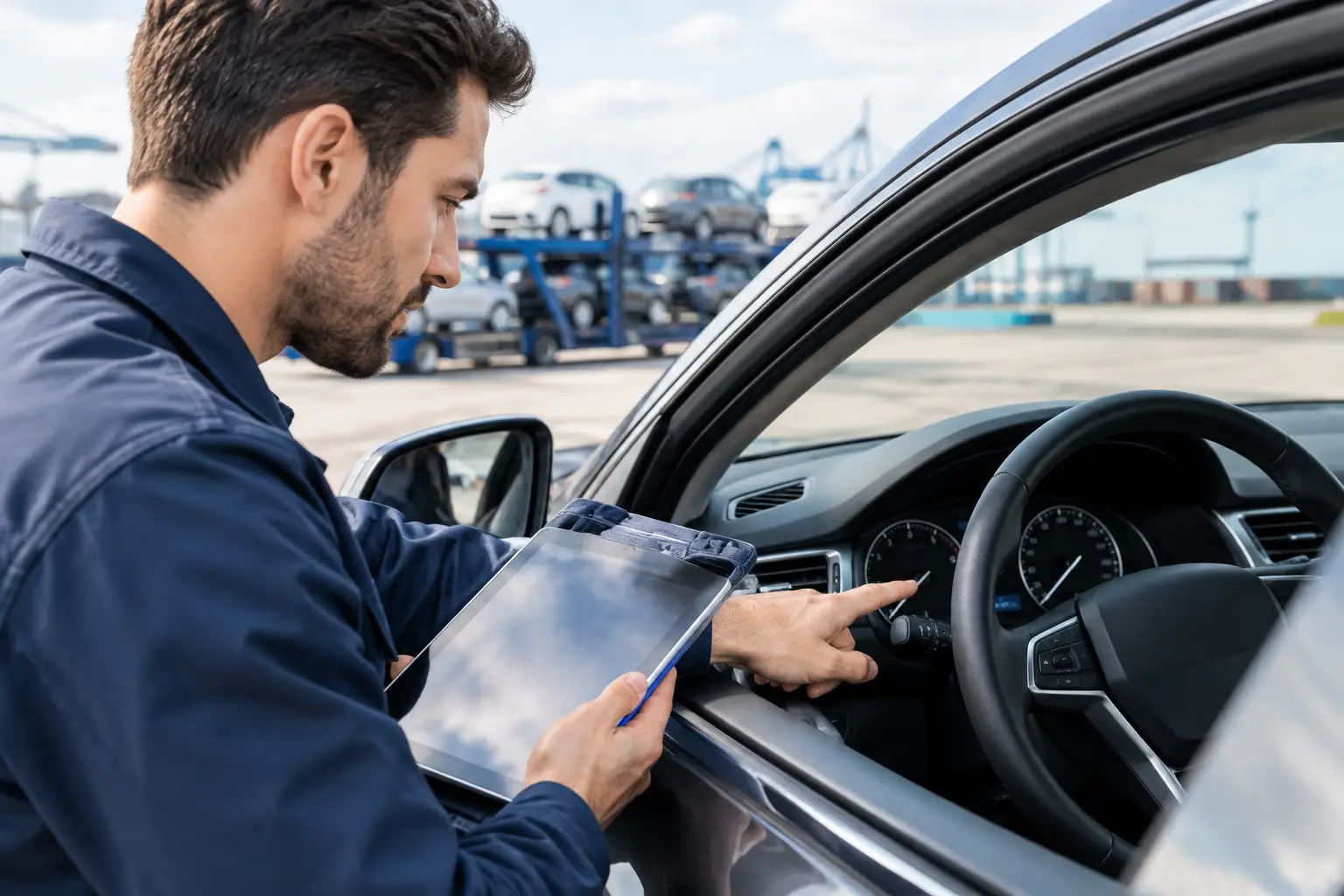
A Japanese speedometer normally displays kilometers per hour. For use in Great Britain, the speedometer must provide a clear mph reading. Some vehicles can be fitted with an approved mph overlay; others need a converted cluster or an additional display. The answer is not always to replace an original, valuable gauge cluster. On collector vehicles, preserving originality while meeting the requirement is often possible, but the method must be properly executed.
The odometer may remain in kilometers, but its reading must be accurately documented through the import and registration process. This is where verified Japanese auction records and independent odometer certification provide real protection. They help establish a clear mileage history before a UK registration record is created.
Warning lights also deserve careful attention. An airbag light, ABS light, check-engine light, or brake warning lamp that stays illuminated can point to a genuine fault, not merely an IVA inconvenience. Diagnose it correctly before booking the test.
Emissions, noise, and engine condition
Emissions standards are not a one-size-fits-all question. The applicable limit can depend on the vehicle’s age and date of first use, as well as its fuel type. A largely original Japanese car in good mechanical condition is usually a better compliance candidate than one with unknown tuning, deleted emissions equipment, or a loud aftermarket exhaust.
Modified turbo cars need particular care. An aftermarket downpipe, decat pipe, nonstandard engine management, or aggressive exhaust may create issues at IVA and can make later MOT testing more difficult. Buying a car with desirable modifications is not automatically a problem, but you need invoices, an honest assessment of the work, and a realistic allowance to return parts of the vehicle to a compliant specification if necessary.
Vehicle identification and physical condition
The chassis or vehicle identification number must be legible and match the Japanese export certificate and every registration document. Corrosion, paint, underseal, or an altered VIN area can create unnecessary questions. Before export, confirm the frame number exactly as recorded on the auction sheet and export documentation.
Inspectors may also assess items such as seat belts, mirrors, glazing, door latches, steering components, sharp edges, wheel and tire suitability, and general build quality. This is why a high-resolution inspection is more valuable than a handful of listing photos. A cheap body kit, poorly fitted steering wheel, loose battery, or damaged seat belt buckle can cost more in corrections and delay than it saved at auction.
Plan Compliance Before the Car Leaves Japan
The best time to manage UK IVA requirements is before the vehicle reaches the port. Start by collecting the original Japanese export certificate, auction sheet, translated condition information, invoice, bill of lading, and any odometer verification records. Check that the make, model, frame number, engine information, and dates are consistent across the paperwork.
Then have the car assessed against the likely IVA requirements. A proper pre-purchase inspection should look beyond cosmetic condition and auction grade. It should identify nonstandard exhausts, emissions-related modifications, missing safety equipment, nonfunctioning warning lights, accident repairs, corrosion, and whether the factory lighting and speedometer arrangement can be adapted sensibly.
At Direct Imported Japan, this is where hands-on auction attendance and mechanical knowledge matter. A translated auction sheet is useful, but it cannot replace someone physically checking whether an R-grade repair is sound, whether warning lights are present, or whether an advertised “stock” car has an exhaust and engine modifications that will complicate UK approval.
There is a trade-off between doing modifications in Japan and doing them in Great Britain. Work completed in Japan can make sense when a specialist knows the exact vehicle well and quality can be documented. UK-based work can be easier to inspect, adjust, and support if it needs changes before IVA. The right choice depends on the model, the parts required, your chosen workshop, and shipping timing. Do not choose solely on the lowest quote.
From Arrival to Registration
Once the car arrives, customs and tax formalities need to be completed before registration can move ahead. HMRC’s NOVA process records the vehicle’s VAT and duty position. The applicable tax treatment varies according to the vehicle, value, origin, and import circumstances, so calculate this before bidding rather than after the car lands.
You will then need to arrange any necessary compliance work, book IVA where required, obtain a pass certificate, and submit the relevant registration application and supporting documents to DVLA. Depending on the vehicle and its age, an MOT may also be required as part of the registration path. Insurance can be arranged around the vehicle identification number, but insurers vary widely in how they treat unregistered imports, so ask early.
Allow time for port release, transport, workshop scheduling, the IVA appointment, re-test contingency, and DVLA processing. The cost of importing is not just hammer price, shipping, and tax. A realistic budget includes compliance parts, labor, testing, transport, registration fees, and a reserve for issues discovered after arrival.
A Better Way to Buy a UK-Bound JDM Car
The right Japanese import is not simply the lowest-priced example with attractive photos. It is the vehicle whose condition, mileage history, documentation, and specification can be explained clearly from auction floor to UK registration. A slightly more expensive, largely original car with verified records may be the better financial decision once IVA preparation, repairs, and resale confidence are considered.
Before bidding, ask whether the car has the correct original components, whether its modifications are defensible, and whether its paperwork tells one consistent story. When those answers are clear, IVA becomes a manageable stage of the import process rather than an expensive surprise waiting at the end.