RoRo Shipping From Japan: What Buyers Need to Know
A vehicle can be bought, inspected, paid for, and ready at a Japanese port before one major question becomes urgent: how will it actually get to you? For many standard passenger cars, trucks, and SUVs, RoRo shipping is the most practical answer. It is usually less expensive than container shipping, built for rolling vehicles, and widely available from Japan to major import markets.
That does not mean it is automatic. A low shipping quote can look attractive until a buyer learns that the destination port is hundreds of miles away, the vehicle cannot be driven off the vessel, or local port charges were not included. The right shipping method depends on the vehicle, destination, condition, timeline, and how much protection the buyer needs during transit.
What RoRo Shipping Means
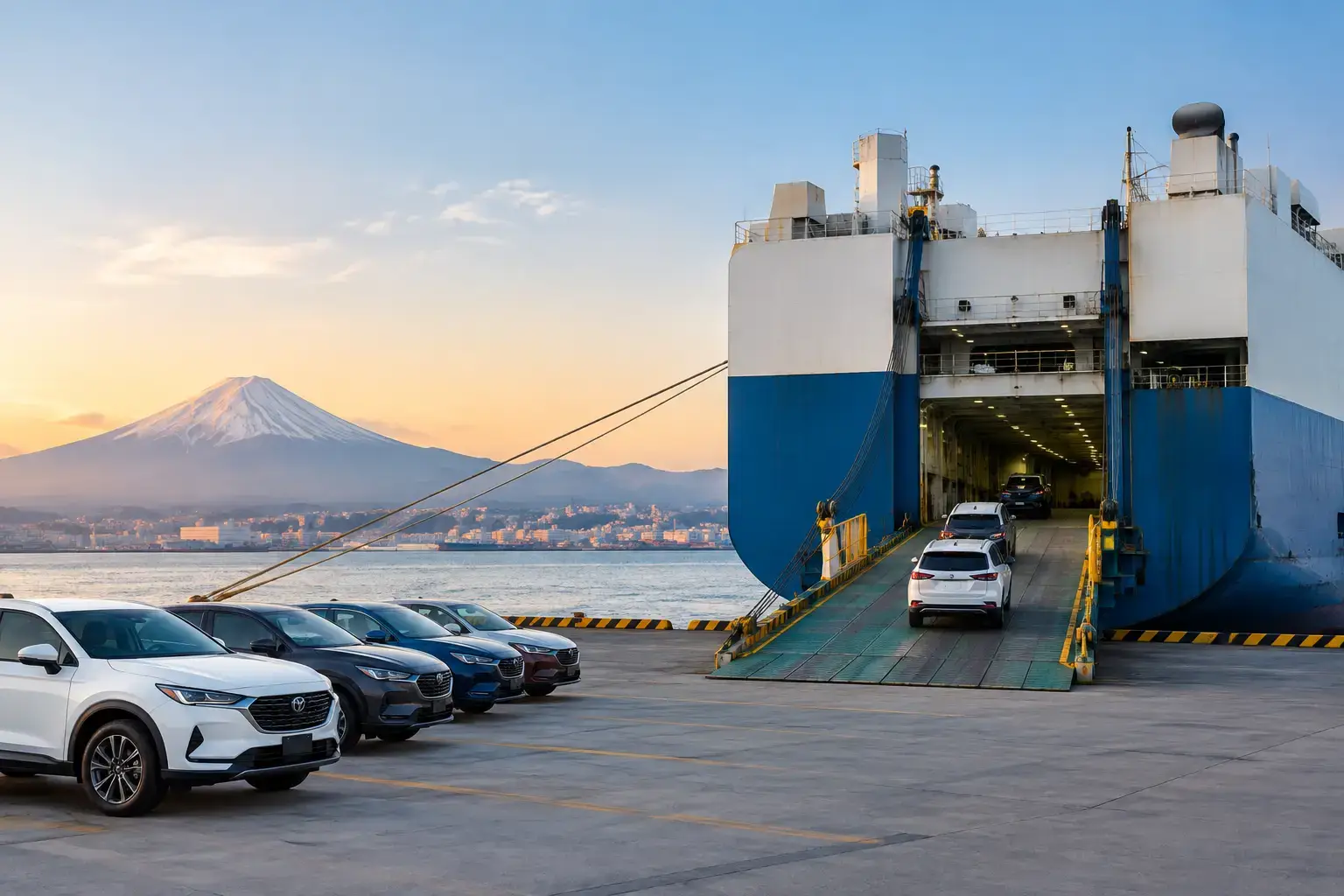
RoRo stands for roll-on/roll-off. Rather than being lifted into a container or secured inside one, a vehicle is driven onto a specialized vessel, parked on an enclosed vehicle deck, secured for the voyage, and driven off at the destination port.
For an export vehicle to qualify, it generally must roll, steer, and brake safely. It does not need to be road legal in Japan, but port operators need to move it under its own power. A non-running project car, a vehicle with severe suspension damage, or one with a flat tire may be refused or may require a different shipping arrangement.
RoRo vessels are purpose-built for vehicles. Their enclosed decks protect cars from direct weather exposure, but this is not the same as a sealed private container. The vehicle will be handled at both ports, and it is part of a larger vessel load. Buyers should approach RoRo as efficient commercial transport, not as a white-glove enclosed delivery service.
Why RoRo Shipping Is Often the Best Fit
For a single drivable vehicle, RoRo is usually the straightforward option. It avoids the cost of hiring an entire container or coordinating a shared container load. Japan has frequent RoRo departures to ports in the United States, Australia, New Zealand, Canada, Europe, the United Kingdom, and many other markets.
It can also simplify port handling. Once the vehicle is cleared for export, it is delivered to the designated Japanese port before the vessel cutoff. After arrival, the consignee or appointed customs broker completes destination clearance and arranges collection from the terminal.
The trade-off is flexibility. Container shipping may be a better choice for non-running vehicles, vehicles that need to travel with permitted parts, or buyers shipping multiple cars to the same destination. It may also suit rare, very low-clearance, or particularly valuable vehicles where the buyer prefers a more controlled loading environment. Those advantages come with higher cost and sometimes longer consolidation lead times.
The Vehicle Condition Still Matters at the Port
Auction grades, inspection reports, and mechanical checks are not just buying tools. They help prevent problems later in the shipping process. A car that starts poorly, leaks heavily, has a weak battery, or has damaged steering can create delays when it reaches the export yard.
Fuel level is another common issue. Carriers normally require only a small amount of fuel in the tank, often no more than a quarter tank. Loose items, personal belongings, spare parts, and unapproved accessories should not be left in the cabin or trunk. Carriers generally do not accept responsibility for these items, and customs authorities may take a serious interest in anything that is not declared.
Convertible tops should be closed and secure. Alarms should be disabled or instructions clearly provided. If the vehicle has a low front lip, extreme ride height, or unusual modifications, disclose that before booking. A vehicle that can technically drive may still be difficult to load safely on a vessel ramp.
How the RoRo Process Works From Japan
The process begins well before sailing day. Once the vehicle is purchased, the exporter confirms its dimensions, operating condition, destination port, and the available vessel schedule. Freight rates are based on factors such as vehicle size, route, carrier, and seasonal demand. Larger SUVs, vans, and trucks cost more because shipping is often calculated by cubic meters rather than vehicle weight alone.
Before delivery to port, the vehicle is prepared for export. This can include cleaning, removing prohibited items, confirming chassis and engine details, and arranging required pre-shipment inspections. Requirements vary by destination. For example, some markets require inspections such as JEVIC, QISJ, or EAA before the vehicle can be loaded or before it can be cleared on arrival.
The exporter then submits shipping instructions and export documentation. Japan’s export certificate, bill of lading details, commercial invoice, and other required paperwork must match the vehicle precisely. A single transposed chassis number can delay customs clearance at the other end.
Once the vehicle reaches the port, it is checked in at the terminal and loaded when the vessel arrives. The bill of lading is issued after shipment. That document is central to the release process, so buyers should understand whether their destination requires an original bill of lading, an express release, or another carrier-approved release method.
Cost: Look Beyond the Ocean Freight Quote
Ocean freight is only one part of the landed cost. Buyers should request a clear breakdown that separates Japan-side charges, ocean freight, insurance, destination port fees, customs brokerage, duty and tax, compliance work, and inland transport.
A quote that appears cheaper may exclude terminal handling, documentation, security charges, or destination delivery. These costs are not necessarily improper, but they should be known before the vehicle is purchased. Clear pricing matters most when comparing routes, because the nearest port is not always the cheapest final option.
For a buyer in the United States, a vehicle arriving at a major port may still require transport to another state. For an Australian, Canadian, or UK buyer, inspection requirements, taxes, registration rules, and port release procedures can change the total significantly. The shipping route should be planned around the final destination, not only the initial port of arrival.
Insurance and Damage Claims
Marine insurance is worth discussing before the vehicle sails. Carrier liability is limited and may not reflect the vehicle’s purchase price, restoration value, or collector value. Marine cargo insurance can provide broader protection, subject to the policy terms, exclusions, and deductible.
Documentation is essential if damage is found. Take clear photographs when the vehicle is collected, inspect it before leaving the port or collection yard, and report visible damage immediately through the proper channel. A claim becomes much harder when the car has already been transported away from the terminal.
Be realistic about the baseline condition as well. If a vehicle had scratches, corrosion, cracked trim, or worn upholstery when purchased at auction, those items should already be recorded in the auction sheet and pre-purchase inspection report. Good reporting protects the buyer by separating pre-existing condition from possible transit damage.
Timing, Delays, and What Buyers Can Control
RoRo schedules are regular, but they are not guaranteed to operate like passenger flights. Weather, port congestion, vessel changes, customs holds, labor disruptions, and missed document cutoffs can all affect the timeline. A vehicle may wait several days or several weeks for its assigned vessel depending on the route and booking window.
Buyers can reduce avoidable delays by deciding on the destination port early, providing accurate consignee information, arranging funds promptly, and understanding import eligibility before bidding. Import rules should be confirmed before purchase, especially for age-restricted vehicles, modified cars, and models without local compliance approval.
At Direct Imported Japan, the value of hands-on export coordination is not simply booking space on a ship. It is checking that the vehicle is ready, the documents agree, the required inspections are complete, and the buyer understands what happens after the vessel arrives.
Is RoRo Right for Your Vehicle?
RoRo is an excellent fit when the vehicle runs and drives, the destination has a suitable receiving port, and the buyer wants efficient transport for one vehicle. It is often the sensible choice for auction purchases, dealer inventory, and enthusiast imports that do not need container-only handling.
But the best answer is not always the lowest freight number. A careful shipping plan accounts for the car’s real condition, its size, destination rules, insurance needs, and the cost of getting it from the port to its final home. Get those details settled before the vehicle reaches the dock, and the arrival process becomes far more predictable.