How to Calculate RoRo Freight Costs Clearly
A RoRo quote that looks inexpensive can become expensive quickly if it covers only the ocean crossing. The practical way to calculate RoRo freight costs is to separate the vessel rate from every charge required to move your vehicle from its location in Japan to the port where you can legally collect it. That distinction matters whether you are buying one 25-year-old JDM vehicle for yourself or building a container of inventory for a dealership.
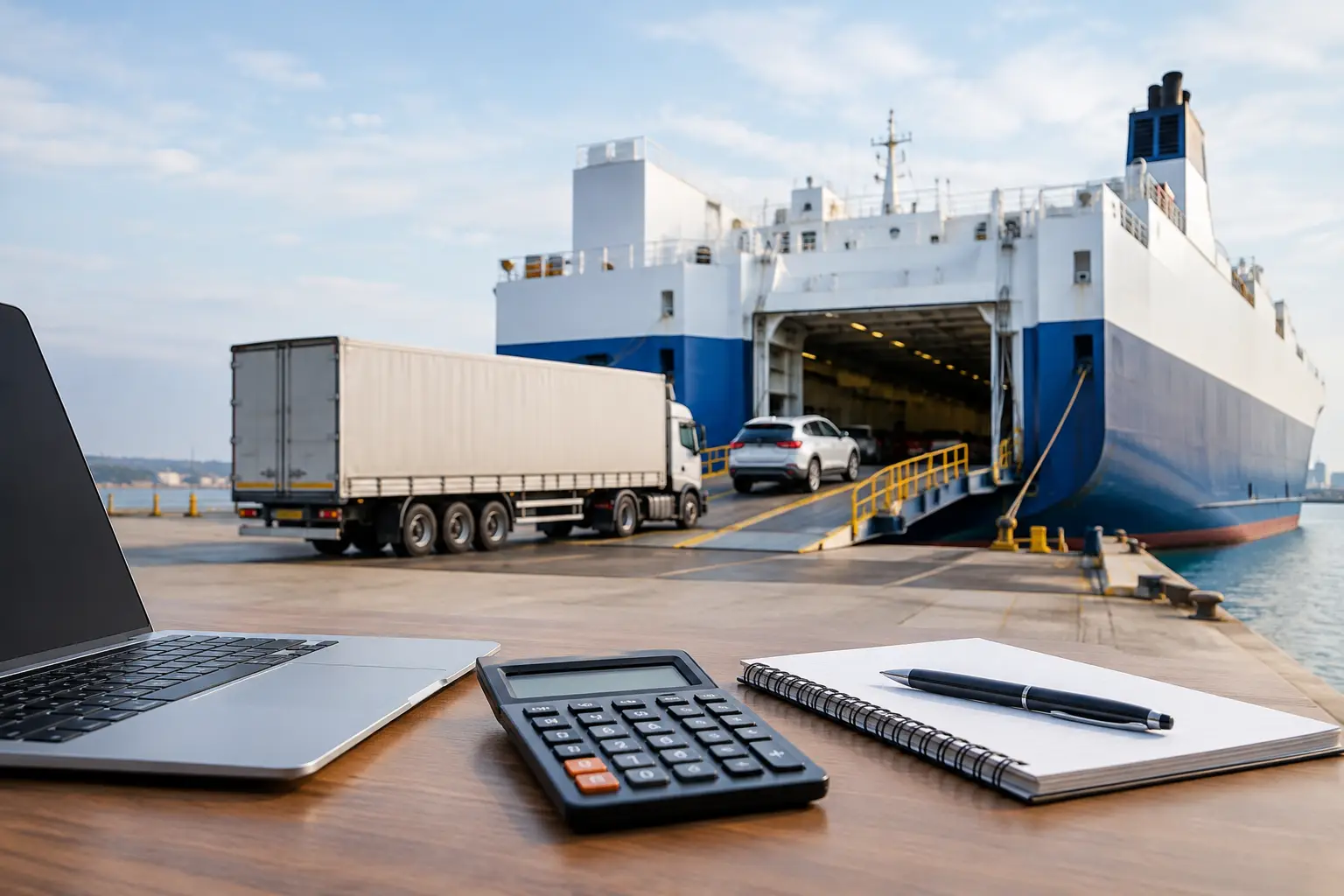
RoRo, short for roll-on/roll-off, is a shipping method in which a running vehicle is driven onto a specialized vessel, secured in an enclosed vehicle deck, and driven off at the destination. It is often the most sensible option for a standard passenger car, SUV, truck, or motorcycle. But it is not automatically the lowest total-cost option, particularly for oversized vehicles, non-running projects, or cars headed to ports with limited RoRo service.
Start With the Vehicle's Shipping Profile
A carrier does not price every vehicle the same way. The first part of a credible estimate is the vehicle’s exact make, model, year, body style, dimensions, and operating condition. A compact Kei car consumes far less deck space than a Toyota Land Cruiser, a long-wheelbase luxury sedan, or a lifted 4x4 with oversized tires.
RoRo carriers commonly use the vehicle’s cubic measurement, often calculated from length × width × height. Shipping lines may quote a minimum measurement even when a vehicle is smaller, and they may measure modified vehicles differently from factory specifications. Roof racks, wide wheels, oversized bumpers, raised suspension, and exterior accessories can change the chargeable size. Do not estimate from a model name alone if the vehicle has been altered.
The vehicle must generally roll, steer, and brake safely. A non-running auction purchase may require a tow arrangement, special loading approval, or transport in a container instead. Low ground clearance can also be an issue on some vessels. These are not minor details to settle after purchase. They affect both cost and whether the booking can proceed.
The Core Formula to Calculate RoRo Freight Costs
A useful working formula is:
Total shipping-to-port cost = Japan inland transport + export handling + ocean freight + documentation + destination port charges + optional insurance
That is not the same as your full landed cost. Customs duty, taxes, compliance work, pre-shipment inspections, registration, and inland delivery after arrival may be separate. Keep those categories separate from the start so that a low freight number does not create a false expectation.
Japan inland transport
Unless your vehicle is already at the export port, it must travel from the auction, dealer, storage yard, or seller to the shipping terminal. Japan inland transport depends on distance, vehicle size, access to the pickup point, and timing. A vehicle bought near Yokohama or Nagoya may cost less to position than one purchased at an auction farther inland.
Auction timing also matters. Storage charges can begin if a vehicle is not collected within the auction’s allowed period. A professional exporter should be able to identify the pickup deadline and arrange transport before avoidable storage costs accumulate.
Export handling and port preparation
This category can include port delivery, terminal handling, export customs processing, deregistration or export certificate preparation, and shipping documentation. Some quotes bundle these charges into a single export fee; others show them individually. Either approach is acceptable if the scope is clear.
Ask whether the quote includes the bill of lading, export documentation, port delivery, and any required vehicle preparation. If a quote simply says “shipping included,” it is not detailed enough to make an informed buying decision.
Ocean freight
Ocean freight is the headline number most buyers focus on. It is the rate for the vehicle to travel from a Japanese departure port to a destination port. The price changes with the route, vehicle measurement, carrier capacity, fuel-related surcharges, seasonal demand, and the number of sailings available.
Popular routes to major U.S. ports often have more frequent service than smaller regional destinations. That can make the ocean rate more competitive, but it does not guarantee a lower final cost. A cheaper sailing to a distant port may leave you with a long and expensive domestic transport leg afterward.
Do Not Confuse Port-to-Port With Door-to-Door
Most RoRo quotations are port-to-port. Your responsibility begins again at the arrival terminal. You may need a customs broker, port release paperwork, customs entry, duty and tax payment, terminal coordination, and transport from the port to your home or dealership.
For a U.S. import, the appropriate port depends on more than the vessel schedule. Consider the vehicle’s final destination, the availability of a knowledgeable customs broker, and the cost to transport the vehicle inland after release. A buyer in the Midwest may find that a West Coast arrival has a favorable ocean rate but an unfavorable onward trucking bill. A Gulf or East Coast option can be more practical depending on the route and vehicle.
Australia, Canada, the United Kingdom, New Zealand, and European destinations have their own inspection, customs, tax, and release requirements. In some markets, a pre-shipment inspection is mandatory or strongly advisable. Treat those costs as part of your import budget, even when they do not appear on the RoRo invoice.
Charges That Commonly Get Missed
The most expensive surprises tend to come from assumptions, not from the ocean freight itself. When comparing quotes, make sure you understand whether each of these is included, excluded, or estimated:
- Origin inland transport from the auction or seller to the Japanese port
- Export documents, terminal handling, and bill of lading charges
- Marine cargo insurance
- Destination terminal, security, handling, and release fees
- Customs brokerage, duty, taxes, and required inspections
- Storage charges if documents, customs release, or collection are delayed
- Inland transport from the destination port to your final address
Marine insurance deserves particular attention. Carriers have liability limitations, and the value of a specialty vehicle can be far greater than a basic carrier settlement. Insurance cost is usually tied to the declared insured value and coverage terms. Read the exclusions carefully, especially for pre-existing damage, loose parts, personal effects, and weather-related claims.
Avoid leaving personal items in a RoRo vehicle. They can create customs problems, may not be covered by insurance, and can lead to delay or refusal at the terminal.
Why Two RoRo Quotes Can Differ So Much
A lower quote is not always wrong, but it should prompt better questions. One exporter may quote only port-to-port freight, while another includes Japan transport and export paperwork. One may use an estimated vehicle measurement, while another has confirmed the dimensions. One may omit destination charges because they are paid locally.
The more concerning difference is a quote based on an unrealistically low freight rate or a vehicle that was never properly assessed. For example, a modified Nissan Skyline may be quoted as a standard coupe even though its exterior equipment and height make it chargeable differently. The correction will not disappear because the original quote was optimistic.
Schedule reliability also has value. A slightly higher rate on a regular, established route may be preferable to waiting weeks for an uncertain booking. If you are buying inventory for resale, the cost of delayed availability can matter as much as the freight difference.
A Practical Example From Japan to the United States
Assume you buy a running, standard-size coupe at a Japanese auction. Your estimate should begin with the auction price and auction fees, then separately account for Japan inland transport to the departure port. Add export handling and documentation, ocean freight based on the confirmed dimensions, and marine insurance if selected.
At the U.S. side, budget independently for customs entry, applicable duty and fees, terminal release charges, and domestic transport. If the vehicle qualifies for the 25-year exemption from U.S. Federal Motor Vehicle Safety Standards, that may simplify eligibility, but it does not eliminate customs paperwork, cleaning requirements, port charges, or the need to meet your state’s registration rules.
The exact figures change by vehicle, route, and date. What should not change is the structure of the estimate. Every line item needs an owner, a currency, and a clear statement of whether it is fixed, estimated, or payable on arrival.
Questions to Ask Before You Approve a Booking
Before committing to a RoRo shipment, ask for the departure and arrival ports, the vehicle measurement used for pricing, the expected sailing window, and a written inclusion list. Confirm whether the vehicle must arrive at the terminal by a specific cutoff date and what happens if it misses that sailing.
Also ask who handles export customs clearance in Japan, what original documents will be sent, whether insurance is included, and which destination fees remain payable. If the vehicle is modified, non-running, unusually low, oversized, or fitted with accessories, disclose that before booking. Honest details at the beginning prevent expensive rework at the port.
A dependable export partner should also verify the vehicle’s condition before it reaches the terminal. Shipping can protect a good purchase, but it cannot repair an auction report that was misunderstood, undisclosed corrosion, or a mechanical problem discovered only after the vehicle arrives overseas.
The best RoRo decision is not the one with the smallest freight figure. It is the one where the vehicle, route, documentation, destination charges, and delivery plan have all been checked before the vessel is booked.