How to Import a Car From Japan to Ireland
A Japanese auction sheet may tell you far more about a vehicle than a glossy dealer listing, but it does not tell you what Revenue will charge when it lands in Ireland. If you are researching how to import a car from Japan to Ireland under Revenue customs rules, treat the purchase price as only one part of the cost. Customs duty, import VAT, Vehicle Registration Tax (VRT), shipping, port handling, and registration can materially change whether a car is the right buy.
Ireland allows private buyers and dealers to import used vehicles from Japan, including right-hand-drive JDM models. The process is manageable when the paperwork, declared values, and vehicle specifications are correct. It becomes expensive when documents are missing, a customs preference is assumed without proof, or a buyer overlooks VRT and NOx charges.
Importing a Car From Japan to Ireland: The Order Matters
The cleanest route is to establish the likely landed cost before bidding or agreeing a purchase. Start with the vehicle's auction price or purchase price, then add Japanese domestic costs, export fees, ocean freight, marine insurance, Irish port charges, customs duty, import VAT, VRT, the NOx levy where applicable, registration, plates, insurance, and any compliance work.
A low hammer price can be misleading. A turbocharged performance car with high CO2 emissions may look attractive in Japan but attract substantial VRT in Ireland. Conversely, a well-documented older enthusiast car may be a better overall purchase even if its initial price is higher.
Before the vehicle leaves Japan, confirm its chassis number, first-registration date, engine size, fuel type, CO2 data, NOx data if available, and exact purchase and shipping figures. These details affect customs classification and Irish registration charges.
Revenue Customs Rules for Cars Arriving From Japan
Japan is outside the EU customs territory, so an import declaration is required when the vehicle arrives in Ireland. In most cases, you or your customs agent will need an Economic Operators Registration and Identification number, known as an EORI number, to complete the customs process.
Customs duty is assessed on the customs value of the vehicle. This generally includes the vehicle price, shipping, and insurance to the EU border. For a standard passenger car imported without a qualifying preference, the commonly applied customs duty rate is 10 percent. Import VAT is then charged at Ireland's standard VAT rate, currently 23 percent, on the customs value plus duty and certain related costs.
That compounding effect is why accurate planning matters. A buyer does not simply pay 10 percent duty and 23 percent VAT on the auction bid. Freight and insurance can form part of the customs base, and VAT is calculated after duty is added.
Can the EU-Japan trade agreement reduce duty?
Potentially, but do not treat a Japanese shipping port or a Japanese registration document as automatic proof that a vehicle qualifies for preferential duty. The EU-Japan Economic Partnership Agreement can provide a reduced or zero customs duty rate for goods that meet the agreement's origin rules and are supported by the required origin statement or other acceptable evidence.
A car built in Japan may be eligible, but eligibility depends on the specific rules, the available proof of origin, and the form of the customs declaration. A used car purchased through auction can create a documentation gap because the exporter may not be the original manufacturer. Have your customs broker confirm the tariff treatment before shipment. If qualifying origin evidence cannot be supplied and accepted, budget for the standard duty rate.
A registered Irish business may have different VAT accounting options than a private buyer. That is a tax and accounting question for your adviser, not something to guess at based on another importer's experience.
Documents You Need Before the Car Sails
The best time to fix a paperwork issue is in Japan, not after the vessel reaches Dublin, Cork, or another Irish port. Your export file should clearly connect the vehicle, seller, buyer, value, and transport.
For a normal used-car import, the core documents usually include the Japanese export certificate or deregistration paperwork, commercial invoice, bill of lading, shipping insurance evidence where applicable, and packing or shipping details. Keep the translated auction sheet, photos, odometer records, and condition report as supporting evidence. They can help establish what was bought and why the declared value is reasonable.
For customs preference claims, retain the origin documentation required for the claim. For Irish registration, you will also need documents supporting the vehicle's identity, age, emissions information, and date of entry into the State. A missing or inconsistent chassis number is not a small administrative issue. It can delay clearance, registration, and resale.
Japanese export certificates are commonly in Japanese. Make sure you have a reliable translation of the relevant details, particularly the chassis number, engine displacement, first-registration date, and deregistration information. A proper file protects you from avoidable questions at the port and at the National Car Testing Service (NCTS) registration appointment.
Customs Clearance and Collection at the Port
When the vehicle arrives, a customs declaration must be lodged through the appropriate Irish import system, usually by a customs agent or freight forwarder acting on your behalf. Revenue may clear the vehicle based on the declaration, or it may request further information or examine the shipment.
Do not under-declare the purchase value in an attempt to reduce duty or VAT. Revenue can challenge a value that does not reflect the transaction or the available vehicle evidence. Beyond the financial risk, a questionable declaration can hold up the car and create problems for a dealer's future import activity.
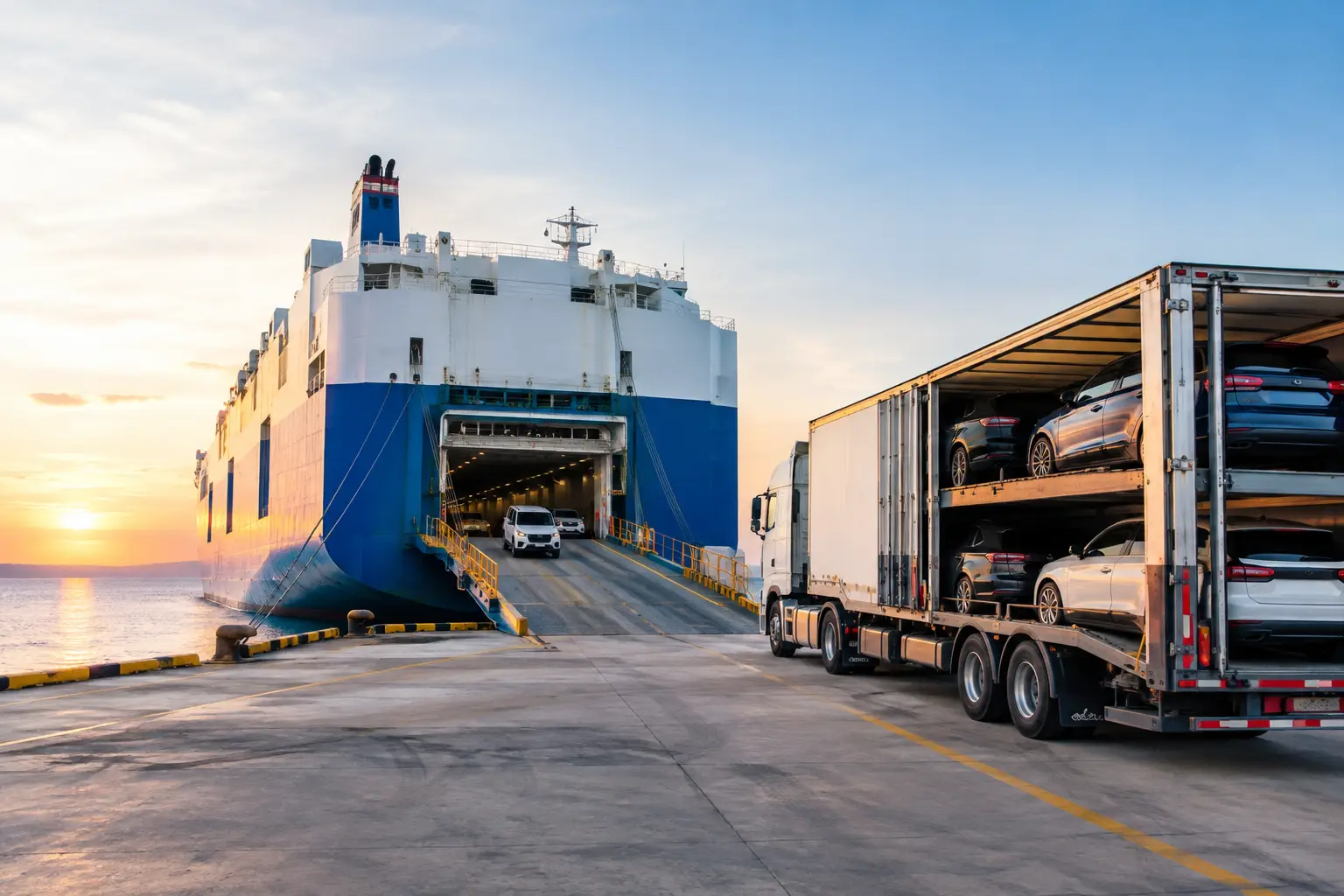
Once duty, VAT, and any required port charges are settled, arrange collection or onward transport. A Japanese vehicle may arrive through roll-on/roll-off shipping or in a container. Roll-on/roll-off is often efficient for a running vehicle, while container shipping can make sense for higher-value cars, non-runners, or shipments that need added protection. Neither method removes the need for correct customs documentation.
VRT, NOx Levy, and Registration in Ireland
Clearing Customs does not mean the car is registered for Irish road use. After entry, the vehicle must be presented to the NCTS for registration and VRT assessment. In general, registration should be completed within 30 days of the vehicle entering the State. Do not let the car sit while you search for missing emissions data or wait on paperwork that should have been obtained before shipment.
VRT on passenger vehicles is generally based on the Open Market Selling Price (OMSP) determined by Revenue and the vehicle's CO2 emissions band. The OMSP is Revenue's view of what the vehicle would sell for on the Irish market, not simply what you paid in Japan. This can be a surprise for buyers accustomed to basing taxes solely on invoice value.
Vehicles first registered in the State may also be subject to the NOx levy. The charge depends on the recorded nitrogen oxide emissions and can be particularly relevant for diesel vehicles. If a Japanese-market vehicle does not have straightforward EU-style CO2 or NOx documentation, ask early how the data will be established. Assumptions made from a similar UK or European model are not always accepted.
At the NCTS appointment, bring the documentation requested for an imported vehicle, including evidence of the entry date, customs clearance details, identification documents, and the Japanese registration or export papers. The vehicle's identity and odometer are checked. After VRT is paid and registration is completed, you can obtain Irish registration plates, arrange insurance, and address motor tax requirements.
JDM Compliance Checks That Are Easy to Miss
Right-hand drive is legal in Ireland, so a Japanese-market steering position is not the obstacle some buyers expect. The practical issues are more specific. Headlights may need adjustment or replacement if their beam pattern is unsuitable for left-side traffic. Rear fog light configuration, speedometer readings, tires, glass markings, and modifications can also need attention.
Modified JDM cars deserve extra caution. Coilovers, aftermarket wheels, exhausts, tinted glass, engine swaps, and altered lighting may be normal in the Japanese enthusiast market, but they can create inspection, insurance, or roadworthiness difficulties in Ireland. An auction grade alone does not answer those questions. A physical inspection should identify modifications, corrosion, accident repairs, warning lights, and underbody condition before you commit.
For older cars, parts availability and local insurance appetite matter as much as tax. For newer cars, emissions documentation and electronic compatibility can be the bigger concern. There is no single answer for every Skyline, Supra, Land Cruiser, kei car, or hybrid. The right decision depends on the exact chassis, specification, use case, and Irish cost base.
Build the Import File Before You Buy
A dependable export partner should not merely send a bid and arrange a vessel. They should verify the chassis and auction history, explain condition findings in English, preserve the export documents, and give you the real figures needed for an Irish customs and registration plan. Direct Imported Japan combines in-person auction inspection, translated reporting, odometer verification, and export coordination so buyers can make decisions with more than a few auction photos.
The most useful question is not, “What will this car cost in Japan?” Ask, “What will this exact car cost legally registered and ready to use in Ireland?” Get the documents, customs treatment, VRT estimate, and compliance work clear before the bid is placed. That is how an exciting Japanese purchase arrives as the car you expected, rather than an expensive lesson at the port.